Local SEO Strategy: A Beginner’s Guide to Getting Found Locally
It’s a rainy Tuesday, and a pipe under Sarah’s kitchen sink has started to leak. She picks up her phone and searches “emergency plumber near me.” Within seconds she sees a map, a few business listings, star ratings, and phone numbers. She taps one and calls.
That moment is why Local SEO Strategy. If your business serves a specific area, appearing in local search results can help nearby people find you when they need you. No one can promise a particular ranking, but you can make your business easier to find and trust. This guide covers the key steps, common mistakes, and a checklist you can use today.
What Is Local SEO?
Local SEO is the practice of helping your business appear when people search for products or services in a particular place. It’s also called local search optimization or local search marketing.
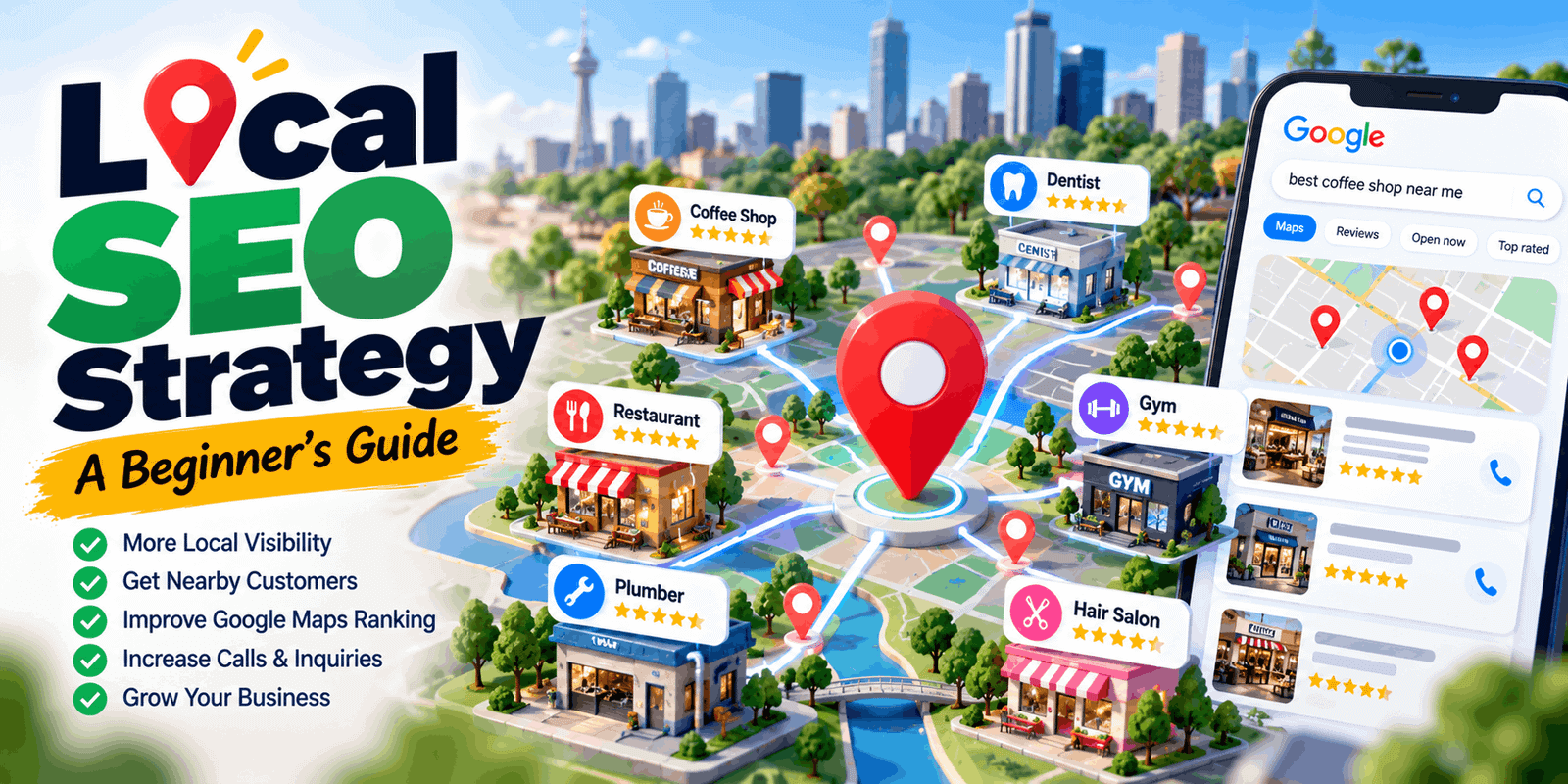
Think of searches like “plumber near me,” “best coffee shop in Toronto,” “SEO agency in London,” or “dentist near me.” Google often answers these with a map and a short list of businesses, alongside regular web results.
General SEO helps a website reach people wherever they are. Local SEO focuses on location, so a bakery in Leeds cares about people in Leeds, not the whole country. The two work together, but Local SEO adds signals such as your business listing, reviews, and address.
How Can Local SEO Benefit Small Businesses?
If you serve a specific area, Local SEO can help you reach people who are nearby and ready to act. Done well, it may support:
- Visibility in local search results and Google Maps
- Website visits from nearby customers
- Phone calls, messages, and direction requests
- Store visits
- Local brand awareness and customer trust
To be clear, Local SEO doesn’t guarantee rankings or customers. It improves your chances of being found and chosen.
The Most Important Local SEO Strategies
1. Optimize Your Google Business Profile
A Google Business Profile is a free listing that can appear in Google Search and Maps for eligible businesses. Claim it and keep everything accurate: your real business name, address or service area, phone number, website, primary category, hours, description, services or products, and photos. Update it whenever something changes. Don’t add keywords to your business name, and follow Google’s Business Profile guidelines to avoid suspension.
2. Choose the Right Local Keywords
Local keyword research means finding the phrases nearby customers actually use. Common types include:
- Service + city: “electrician Manchester”
- Service + neighborhood: “yoga studio Brooklyn Heights”
- “Near me” searches: “pharmacy near me” (Google uses the searcher’s location, so strong location signals matter more than repeating the phrase)
- Local informational searches: “how to prepare a house for winter in Calgary”
Search intent matters. Someone searching “dentist near me” probably wants to book, while someone reading about winter home prep wants to learn. Match each page to that need.
3. Create Location-Focused Website Content
Make sure your website clearly states what you do and the areas you serve. Useful formats include service pages, a location page for each place you genuinely operate, local guides, FAQs, and helpful blog posts. Genuine local case studies can add credibility. Avoid thin or duplicate location pages that swap only the city name. They provide little value and may appear spammy.
4. Keep NAP Information Consistent
NAP stands for Name, Address, Phone number. Keep these details identical on your website, Business Profile, and important directories. Consistent information helps customers and search engines trust you. If you’ve moved, changed numbers, or rebranded, correct outdated or conflicting listings.
5. Build and Manage Local Citations
A local citation is a mention of your business details on another website. Examples include business directories, industry directories, local chambers or associations, and relevant local platforms. Choose quality and relevance over quantity. A few accurate, relevant listings are better than hundreds of low-quality directories.
6. Earn Genuine Customer Reviews
Authentic reviews help people decide whether to trust you. Ask real customers for honest feedback, perhaps with a polite message after a job. Reply professionally to every review. For negative ones, stay calm, thank the reviewer, and offer to fix the problem. Never buy, write, or trade for fake reviews, as this breaks Google’s policies and damages trust. Reviews don’t automatically raise rankings, but they matter to customers.
7. Improve Your Website for Local Search
Make your site easy to use. Aim for mobile-friendly design, fast-loading pages, HTTPS, simple navigation, clear contact and location details, click-to-call buttons, and relevant service pages. A good experience helps visitors become customers.
8. Use Local Business Structured Data
Structured data is code that labels information on a page. LocalBusiness markup tells search engines your business name, address, phone number, hours, and more in a standard format. It can help them understand your page, but it doesn’t guarantee special search features or higher rankings. Keep it accurate and validate it using Google’s Rich Results Test.
9. Earn Relevant Local Backlinks
Local links come from sites in your community: local organizations, community websites, industry associations, local news coverage, genuine partnerships, and events you host or support. Earn them by being useful and involved. Avoid paid link schemes and spammy tactics.
10. Create Helpful Local Content
Publish content that helps people in your area, such as local guides, service-area guides, community information, local FAQs, seasonal advice, and helpful comparisons. A heating company might explain how cold local winters affect boilers. Focus on usefulness and originality, not on inserting city names.
Local SEO Strategy Step-by-Step
- Define your service area. Decide which towns or neighborhoods you realistically serve.
2. Set up or improve your Google Business Profile.
3. Research local keywords and search intent.
4. Optimize important pages. Check titles, headings, service details, and contact information.
5. Create useful local content that answers real questions.
6. Keep business information consistent everywhere it appears.
7. Earn genuine reviews through good service and polite requests.
8. Build relevant local citations.
9. Earn relevant local backlinks through community involvement.
10. Monitor and improve. Review Business Profile insights, Google Search Console, and analytics, then refine.
Local SEO for Different Types of Businesses
- Restaurants: Keep menus, hours, and photos current, and encourage honest reviews.
- Plumbers: List services and service areas clearly, and make your phone number easy to tap.
- Dentists: Create clear pages for each treatment, and respect patient privacy when responding to reviews.
- Real estate: Write genuine neighborhood guides and keep agent details accurate.
- Local retail stores: Show products, opening hours, and in-store events.
- Professional services: Explain services and credentials clearly, as accountants and solicitors do.
- Home service businesses: Build pages only for areas you actually serve.
- SEO and digital marketing agencies: Use clear service pages, honest portfolios, and real client reviews shared with permission.
Common Local SEO Mistakes to Avoid
- Keyword stuffing: Write naturally for people.
- Fake reviews: Earn real ones instead.
- Incorrect business information: Audit your listings regularly.
- Duplicate Google Business Profiles: Keep one profile per eligible location, and search for an existing one before creating a new one.
- Thin location pages: Create them only when you have unique, useful content.
- Irrelevant directories: Choose trusted, relevant ones.
- Buying spammy backlinks: Earn links through real relationships.
- Ignoring mobile users: Test your site on a phone.
- Neglecting reviews: Set aside time each week to respond.
- Not monitoring performance: Check your data monthly.
Local SEO Checklist
☐ Google Business Profile is verified and accurate.
☐ Correct primary business category is selected
☐ Business information is accurate
☐ Website is mobile-friendly
☐ Contact information is easy to find
☐ Important local keywords are researched
☐ Service and location pages are useful
☐ NAP information is consistent
☐ Relevant citations are maintained
☐ Genuine customer reviews are encouraged
☐ Local content is published when useful
☐ Relevant local backlinks are earned
☐ LocalBusiness structured data is considered where appropriate
☐ Local performance is monitored regularly
When Will Your Local SEO Efforts Start Showing Results?
Local SEO takes time, and no one can guarantee a specific timeline. Results depend on competition, business location, industry, website quality, your existing online presence, content quality, reviews, authority and relevance, and how consistently you keep improving. A new shop in a quiet town may see a very different pattern from a law firm in a busy city. Track calls, direction requests, search visits, and reviews, then adjust your approach over time.
Final Thoughts
A strong Lo*cal SEO strategy comes down to a few habits: an accurate Google Business Profile, relevant keywords, useful website content, consistent business details, honest reviews, a smooth website experience, and genuine local links.
At its core, Local SEO helps search engines and customers understand who you are, what you offer, where you operate, and how to reach you. Stay accurate, stay helpful, and choose sustainable practices over shortcuts. If you’d like to keep learning, explore more SEO guides on RS Valley.
Frequently Asked Questions
What is Local SEO in simple words?
Local SEO helps your business appear when people search for nearby products or services. It focuses on things like your Google Business Profile, reviews, local keywords, and accurate contact details, so nearby customers can find you more easily.
What Lo*cal SEO Strategy Should Beginners Start With?
Start with a complete, accurate Google Business Profile, then make sure your website clearly states your services and location. Create consistent business listings and encourage real customers to leave honest reviews. Build your local presence gradually instead of doing everything at once.
How Does Google Business Profile Benefit Local SEO?
It gives Google and customers verified details about your business, such as hours, location, services, and photos. Your profile can show up in Search and Maps, making it easier for potential customers to discover and reach your business when the information is accurate and up to date.
How do I find local keywords?
Think about what customers would type, such as your service plus your city or neighborhood. Check Google’s autocomplete and related searches, look at your Search Console queries, and review the language customers use in their questions and reviews.
How Much Do Customer Reviews Impact Local SEO?
Reviews help customers decide whether to trust you, and they’re part of a strong local presence. They aren’t a guaranteed ranking shortcut. Focus on collecting honest feedback, responding politely, and never using fake reviews.
How Quickly Can Local SEO Start Delivering Results?
It varies. Competition, location, industry, website quality, and consistency all play a part. Treat it as an ongoing process, and track calls, visits, and enquiries to see whether your efforts are moving in the right direction.
Can I do Local SEO myself?
Yes, many beginners handle the basics themselves: updating a Google Business Profile, improving website pages, and requesting reviews. If your market is competitive or time is short, a trustworthy professional can help. Be careful with anyone who guarantees specific search rankings.
Is Local SEO Beneficial for Small Businesses?
Often, yes, especially if you serve customers in a specific area. It helps nearby people find and trust you without needing a large advertising budget. Results aren’t guaranteed, but the basics are low-cost and worthwhile.